

How To Run Check Disk Windows 10 On An External Drive That Doesn't Register In Windows
My external USB hard bulldoze, with 11,000 photos from Windows seven, isn't recognised by Windows ten. How practice I transfer them to Windows 10 for future safekeeping? Jaki
The Universal Serial Bus (USB) connects billions of keyboards, mice, joysticks, printers, external hard drives and other peripherals to roughly 1.5bn personal computers, and more 3bn mobile phones use the smaller Micro USB and newer USB-C versions. It generally works pretty well but most people have probably suffered from a USB device failing or not being recognised.
Lots of things tin can go wrong. The port, the connecting cable, the power supply and the external hard drive (EHD) can all endure from physical and/or electrical faults.
Some external hard drives draw their power from the USB port and they may not get plenty. This tin be a problem if the PC's motherboard does non supply enough power to the USB port you are using or if the drive is plugged into a not-powered hub. EHDs that have their own power supplies tend to work more reliably.
USB cables tin can fail after prolonged use, though this is more likely to happen to the Micro USB cables used with mobile phones. External difficult drive cables rarely neglect unless they get the aforementioned sort of abuse. Still, if you have two devices that utilise the same type of cable, you tin can bandy them over to run across if that solves the trouble.
Alternatively, it could exist a software problem. For example, information technology could be the lack of a suitable driver, a corrupted driver or a conflict with another USB device.
If you do not take a fill-in and cannot become the drive to piece of work, it may be worth rolling back to Windows 7 and making a backup earlier reinstalling Windows 10 – or enlisting the help of a friend who is still running Windows vii.
Back up, back up, back upward
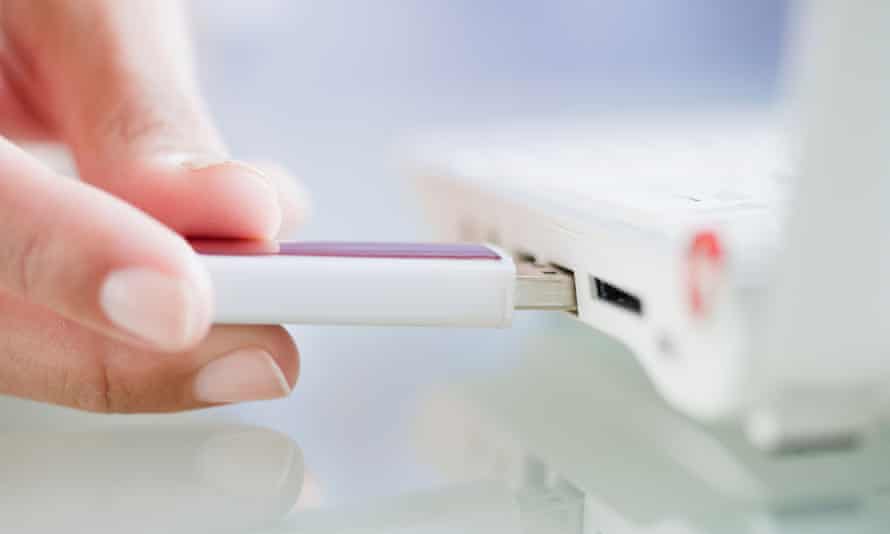
Y'all should never lose data because an external USB hard drive fails. Ideally, you should have at least three copies of your photos stored on different media and at least ane should be kept in a different place. Schofield's Second Law of Computing states that information doesn't really exist unless y'all have at least ii copies of information technology.
You tin can back up your photos to thumb drives, SD cards, optical discs (CD, DVD, Blu-ray), external hard drives, a local network server or an online service. These include Amazon Photos, Apple'due south iCloud, Microsoft OneDrive, Google One and third-party services such as pCloud and Mega.NZ. See my recent reply to "Where'due south the cheapest place to shop 500GB of data online?"
Diagnostic software
The major hard drive manufacturers accept the most experience in debugging hard drive issues and some have free software to assistance. The leading examples include WD's Data Lifeguard Diagnostics and Seagate's SeaTools for Windows. Yous may already have 1 installed. If non, check your EHD manufacturer'due south website for a tool that could notice and fix your missing drive.
Simple debugging
Nigh USB failures are glitches. Oftentimes, if a device is not recognised by one port, it will work when plugged into a unlike port or a different PC. If non, the traditional approach – basically, turning your PC off and on again – ofttimes works.
First, unplug the EHD, unplug information technology from the mains and unplug and straighten the information cablevision. Second, restart your PC and expect for 2 minutes (because Windows x keeps loading things in the background fifty-fifty after it claims to exist ready for use). Third, plug the connecting cable into the EHD, making sure it is firmly seated. Finally, plug the EHD back into the mains, plough it on (if it has a manual switch) and plug the USB cable back into the PC. With luck, either the PC will recognise the external drive or discover it as a new device and install it with a suitable driver.
Turning a PC off and on does non piece of work every bit well as it used to because of Windows 10'south Fast Startup system. Ideally, nosotros desire the PC to forget everything and make a fresh showtime. With Fast Startup, Windows x stores core parts of retentivity, including the drivers, in a hidden file called hiberfil.sys and only reloads this file when you turn it dorsum on. You could temporarily disable Fast Startup but I'd just move on to the next stride.
Uninstall, reconnect
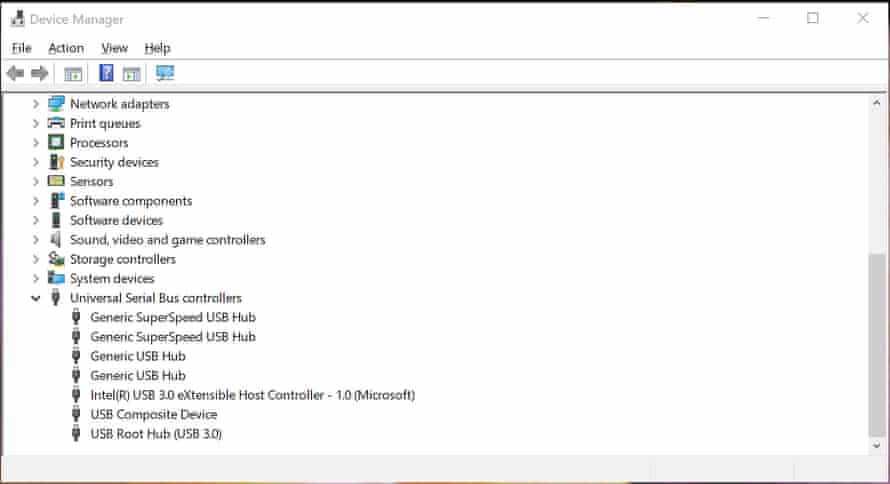
If a reboot doesn't make Windows renew its USB drivers, you tin can do it manually. With the EHD plugged in, go to the Start menu and type or paste the words "Device Manager" into the search box, then run the app that comes upwards. Side by side, click the arrow (>) adjacent to "Disk drives" in the Device Director plan to encounter a list of the drives that your PC knows well-nigh. Look for the drive that is not being recognised. Information technology should exist obvious from its name, which might be something like "WD Ext HDD 1021 USB Device" or "WD MyBook" or "Seagate Expansion Desk-bound", or any.
Right-click on your EHD and select "Uninstall device" from the pop-upward carte. When that has finished, unplug the USB cablevision.
Await a minute, then plug the USB cable dorsum in. Windows should see the drive and install a driver. Your EHD should then appear in the "This PC" section of Windows 10's File Explorer.
If this doesn't work, use the Settings app to run Windows Update, restart your PC and try once again. Windows Update delivers new drivers and software patches when they become available.
Some – ordinarily obscure – USB peripherals use special drivers that you can simply download from the manufacturer'south website. If Windows hasn't found the best driver, it might be worth looking for one. If you find i, follow the aforementioned process but select "Update driver" from the carte.
In passing, users who accept no problems with external drives can still employ Device Director. The default setting for USB drives allows their quick removal. This reduces the risk of data corruption when users unplug drives without thinking. Select "Properties" from the popular-up bill of fare, go to the "Policies" tab and change the default to enable write caching in Windows. This improves performance only y'all must employ the "Safely Remove Hardware" option before unplugging devices.
Trash your USB controllers
USB ports are handled by USB host controllers. To see them, click the arrow next to "Universal Series Bus controllers", which will be at or near the bottom of the alphabetical listing in Device Managing director. As earlier, right-click each host controller and select Uninstall. Once you have finished, restart your PC. Windows volition automatically reinstall the USB host controllers with clean, fresh versions.
Beyond this, in that location is non much y'all can exercise. If a PC has serious problems, you lot could always reinstall the BIOS firmware and update the motherboard's chipset drivers. The latest versions should be available from the PC or motherboard manufacturer's website. However, non-technical users should never have to do this blazon of thing unless prompted.
For example, you lot may have washed a firmware update last yr because nearly large PC suppliers rolled out fixes for the Spectre and Meltdown vulnerabilities covered in an earlier answer. Simply it shouldn't be necessary for a simple problem like a USB bulldoze non existence recognised.
Rescue your data
All difficult drives neglect, typically later five or more than years but sometimes after a few months. This is why nosotros demand backups. Sometimes EHDs neglect but the drive yet works. If you don't have a fill-in and cannot afford a professional data recovery service, this is a last resort.
USB drives are merely cheap hard drives in (usually) plastic enclosures. Yous can easily make your own by buying a big hard drive and a divide enclosure. If your EHD doesn't piece of work only you tin hear the drive spin upwardly when it is plugged in, you can try removing the hard drive and installing it in a new enclosure.
Research your EHD online to find out how big the drive is (2.5 inch or 3.5 inch) and the type of drive (usually SATA), so you tin buy the correct enclosure. Plastic enclosures are cheap and more often than not expert plenty. Metal enclosures with built-in fans are better for cooling a difficult bulldoze that is in constant utilise and making it last longer.
Have you got a question? Email it to Inquire.Jack@theguardian.com

How To Run Check Disk Windows 10 On An External Drive That Doesn't Register In Windows,
Source: https://www.theguardian.com/technology/askjack/2019/aug/08/how-to-make-windows-10-recognise-an-external-hard-drive
Posted by: rayrectly.blogspot.com
0 Response to "How To Run Check Disk Windows 10 On An External Drive That Doesn't Register In Windows"
Post a Comment